


Psychoanalysis is the most
intensive form of the talking therapy, devised by Sigmund Freud one hundred
years ago, but developed continuously and radically since then. Patients attend
five fifty minute sessions weekly, usually for several years, working with their
psychoanalyst to examine and to explore unconscious conflicts of feeling,
emotion and phantasy that are at the root of their symptoms and the problems
that are troubling them.
Psychoanalytic theory suggests that it is by no means only
genetic and constitutional factors that make up the personality. Other central
influences include the experience of birth, of the early relationships with
parents, of sexuality, of love and hate, of loss and death. These crucial
experiences, worked over and lived out in the core relationships of the family,
lay down patterns in the mind of feeling, phantasy and relationship - patterns
which provide unconscious templates, or models of relationships. Such
unconscious versions of relationships are often at the root of the problems
which lead people to seek help.
The regular sessions of psychoanalysis provide a setting
within which these unconscious patterns can be brought into awareness and worked
on with a view to change. The relationship with the analyst is influenced
inevitably and powerfully by the patient’s unconscious ways of behaving and
itself becomes a central area of study, enabling light to be thrown on the
patient’s patterns of relationship in the immediacy of the sessions.
The work of psychoanalysis is long and arduous, for both
patient and analyst. When successful, however, psychoanalysis can be a unique
and profound experience that often leads to long-term development in close
relationships, work and creativity. Success depends on both analyst and patient
and on the quality of their joint work.
Return top
Mission
Statement
We aim to develop our position as
the leading centre of excellence in the UK in the provision of psychoanalytic
training, education, publication and clinical practice and to develop a
professional organisation for the furthering of psychoanalysis through diversity
and debate.
To support the development of psychoanalytical knowledge as a
general theory of mind.
To maintain and further the clinical and scientific standards of
psychoanalysis.
To promote an internal culture where a diversity of psychoanalytic
theories and techniques are valued and can be debated with
intellectual openness.
To train high quality psychoanalytic professionals in sufficient
numbers to maintain and develop the profession of psychoanalysis.
To provide and/or support high quality psychoanalytic treatment.
To disseminate knowledge about psychoanalysis, to health and allied
professionals.
To promote the contribution of the discipline of psychoanalysis to
public and intellectual life.
To form mutually collaborative clinical and academic links with
other organisations (public sector, academic and charitable) which
support the furtherance of the above aims.
To work as appropriate with and/or within national and international
organisations in the interests of psychoanalysis and the
psychoanalytic profession.
To maintain the physical and administrative facilities necessary for
the above activities to take place in an appropriate and
professional environment.
Return top
Who We
Are
-
The Society currently has 438 members and 46
candidates. The majority of them live in or near London, though there are 158
members in many different countries and in other parts of the British Isles.
Many psychoanalysts work in public organisations, principally in the Health
Service, as well as in private practice. Recently it has become possible for
those living at a distance from London to do the training. Members of the
Society come from a diversity of countries and cultures, offering treatment in
over 22 languages, including Armenian, Catalan, Dutch, Finnish, Greek, Hebrew,
Hindi, Hungarian, Iranian, Norwegian, Portuguese, Polish, Punjabi, Russian,
Swedish, Turkish, and Urdu. Today as in the past, approximately half of the
British Psychoanalytical Society are women. A complete list of qualified UK
Institute trained psychoanalysts is available here
www.psychoanalysis.org.uk/uklist.htm
Return top
The
Qualifications of Psychoanalysts
Members of the public considering psychoanalysis may want to
consult this list to make sure that a practitioner describing themselves as a
psychoanalyst is in fact qualified genuinely to practise this intensive form of
treatment. Those named are properly entitled to hold themselves out to the
public as psychoanalysts because of their Internationally recognised training.
The Institute of Psychoanalysis qualifies its members to belong to the
International Psychoanalytical Association (IPA) - a body with members on all
five continents which safeguards professional standards and oversees the stages
by which new societies are created.
Since the term Psychoanalyst is currently not yet protected in law anyone can,
at present, claim to be one.
If you have any doubts that a particular individual is qualified to represent
themselves as a qualified psychoanalyst you may wish to consult the following
list of all qualified practising Institute trained psychoanalysts working
currently in the UK.
A searchable listing of qualified and practising
psychoanalysts, in particular areas of the UK, as well as psychoanalytical
psychotherapists, can be found at the
BPC Website.
Under 'Institution' select
British Psychoanalytical Society.
Return top
Where do
we work?
Psychoanalysts work with patients intensively (fifty-minutes a
day, five days a week) and less intensively (fifty-minutes a day,
one, two, three, or four days a week). Psychoanalysts work in public
organisations as well as in private practice. Over 250
psychoanalysts work in the National Health Service; many hold
distinguished positions in psychiatry, child psychotherapy, adult
psychotherapy, psychology, social work, and family therapy. A
significant number also work in universities; 18 are professors. It
is their judgement that their private psychoanalytic experience
deepens and enhances their public work in the NHS and higher
education.
Return top
Our
Training
Founded in 1924, the Institute of Psychoanalysis has trained
generations of psychoanalysts, many of whom have become leaders in the field of
mental health. The Institute of Psychoanalysis welcomes applicants from all
types of professional and academic backgrounds, from all over the world. Many
students are psychiatrists or medically qualified, some are child or adult
psychotherapists, psychologists, social workers or academics, and some come from
another background altogether. The Institute of Psychoanalysis training leads to
the title ‘psychoanalyst’, as recognised by the
International Psychoanalytical Association (IPA).
Frequently
Asked Questions
Further
Information
Return top
The London
Clinic of Psychoanalysis
The
London Clinic of Psychoanalysis
currently has over 100 patients in treatment. Treatment is low-cost; patients
are invited to contribute to help cover the running costs of the Clinic. The
Child and Adolescent Department provides assessment and treatment for patients
between 2 and 17 years of age.
Further
Information
Return top
Publications
The Institute of Psychoanalysis is the foremost publisher of
psychoanalytic literature. The 24-volume Standard Edition of the Complete
Psychological Works of Sigmund Freud was conceived, translated, and produced
under the direction of the British Psychoanalytical Society. The Society, in
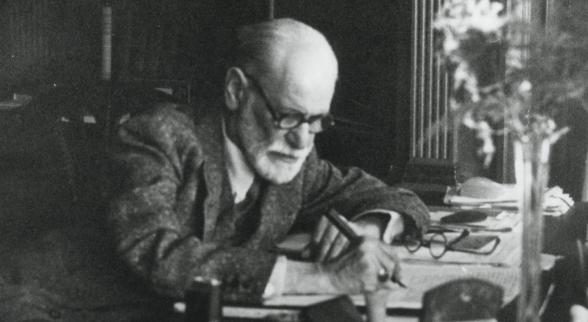
conjunction with Random House, will soon publish a new, revised and expanded
Standard Edition. With The New Library of Psychoanalysis the Institute continues
to publish the books of leading theorists and practitioners. The International
Journal of Psychoanalysis is published by the Institute of Psychoanalysis. Now
in its 84th year, it has the largest circulation of any psychoanalytic journal.
Return top
Library
and Archives
The British Psychoanalytical Society library is probably the
finest psychoanalytical library in the world, holding over 25,000 volumes. The
Archive of the British Psychoanalytical Society contains important collections
on the origins and history of psychoanalysis. It is used and appreciated by
scholars worldwide.
Further
Information
Return top
Public
Lectures
Since it was founded in 1924, the Institute of Psychoanalysis
has offered lectures to the public. The Society continues to offer a wide
variety of public courses and events, including The Introductory Lectures, a
two-term introduction to the basic principles and recent developments in
psychoanalysis; termly lectures from the Centre for the Advancement of
Psychoanalytic Studies and Meet The Author - book launches for titles in the New
Library of Psychoanalysis series. Recent speakers have included David Bell, Glen
Gabbard, Michael Rustin, Margaret Rustin and Margot Waddell.
Further
Information
Details of these and other events can be found at
www.psychoanalysis.org.uk/events.htm
Return top
Statutory
Registration
The British Psychoanalytic Council has issued a public
position statement on statutory regulation and a range of other issues related
to Government policy and initiatives, e.g. National Occupational Standards, IAPT,
NICE guidelines, New Ways of Working.
It has been occasioned, in part, by recent media coverage of the views of some
psychotherapists, including some psychoanalytic psychotherapists, on some of
these issues. The British Psychoanalytic Council is engaging with these policies
and initiatives actively and positively, and wishes to differentiate its
position from those therapists who seem to consider this to be undesirable.
This position statement is available on the BPC website, at
http://www.psychoanalytic-council.org/main/index.php?page=14083
Return top
Concerns
and Complaints
The British Psychoanalytical Society aims to ensure that its
members maintain the highest standards of professional conduct.
All members are expected to adhere to the Society’s Code of
Ethics and those in clinical practice are subject to the Code of
Ethics and complaints procedure of the
British
Psychoanalytic Council (BPC)
If a complaint or concern about a member of the Society who is
on the British Psychoanalytic Council Register cannot be
resolved directly with him or her, you should should contact the
British Psychoanalytic Council
BPC Complaints Website Section
email: mail@psychoanalytic-council.org
Address: British Psychoanalytic Council
Suite 7
19-23 Wedmore Street
London N19 4RU
Tel: 0207 561 9240
Fax: 0207 561 9005
Alternatively, you may contact the Institute Manager Mr Nick
Hall who will be able to advise you.
email:
nick.hall@iopa.org.uk
Tel: 020 7563 5005
Address: Mr Nick Hall
Manager
Institute of Psychoanalysis
112a Shirland Road,
London, W9 2EQ
If the complaint concerns someone seen through the London
Clinic of Psychoanalysis
please click here
Return top
Further
Information
For further information please contact Mr
Nick Hall, Institute Manager,
020 7563 5005
For information about psychoanalytic training contact
Mr Luke Perry, Executive Education
Officer
020 7563 5015
For information about treatment for adults, adolescents or
children contact Ms Trudy Turmer,
Clinic Administrator,
020 7563 5002
For information about the library contact Mr
Saven Morris,
020 7563 5008
For information about the archives contact:
archives@iopa.org.uk
www.psychoanalysis.org.uk/archives.htm
For general enquiries telephone: 020 7563 5000
Fax: 020 7563 5001
MANAGEMENT PLAN 2010
Return top
How to
Find Us
How to find
us

Click small map
Cover Image © 2008 Andy Warhol Foundation for the Visual
Arts / Artists Rights Society (ARS), New York / DACS,
London. Courtesy Ronald Feldman Fine Arts, New York
Return top
The
Audio-Visual Project
Introduction
The films on this page are part of an ongoing audiovisual project. This
was started in 2007 by the Student Organisation of the British Institute of
Psychoanalysis, with the aim to film eminent psychoanalysts talking of
their work and life with new generations of students and psychoanalysts. In 2008
a film group was also established in the British Psychoanalytical Society.
Funding generously granted from the International Psychoanalytical Association
will help to develop the quality of the materials produced, and will include the
production and restoration of audiovisual material on various clinical and
theoretical topics related to psychoanalysis, as well as its training. This page
will be updated as new films will become available.
www.psychoanalysis.org.uk/audiovisual.htm